
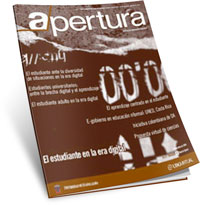
El estudiante adulto en la era digital
Keywords:
era digital, TIC, educación virtual, inmigrantes digitales, nativos digitalesAbstract
A partir de la década de los noventa, la tecnología se ha instalado con fuerza en nuestras vidas y ha penetrado en todos los contextos y transformado nuestros hábitos cotidianos, generando nuevas necesidades, actitudes y retos; asimismo, ha impactado a la universidad en su concepción, lenguaje, estructura, procesos y relaciones. No obstante, las experiencias de educación virtual en el mundo son relativamente recientes, sobre todo en Latinoamérica, donde ni docentes ni estudiantes virtuales cuentan con estereotipos, se están haciendo, se están descubriendo, y ello crea interrogantes, incertidumbre acerca de las características de un estudiante virtual. Las tecnologías pueden ser utilizadas en cualquier programa educativo, y en la actualidad están presentes en diversos niveles y contextos, y es posible contar con estudiantes virtuales a nivel escolar, universitario, en formación avanzada, en la empresa y en múltiples experiencias educativas informales. La educación a distancia es una nueva manera de participar en el proceso educativo y por ello conviene reflexionar acerca de quienes buscan aprovechar esta oportunidad nueva y distinta, si se quiere lograr un aprovechamiento real y adecuado de las tecnologías. Sólo así podremos generar ambientes de formación de mayor pertinencia y sentido que respondan a la gran diversidad de necesidades educativas en nuestros países.
Downloads
Issue
Section
License
The copyright belongs to the authors of the text. In case the manuscript is accepted for publication, the Sistema de Universidad Virtual of the Universidad de Guadalajara (UDGVirtual) is authorized to modify the text in the correction of style, translate, fix, disseminate, reproduce, publish and market with this. Likewise, the Universidad de Guadalajara is authorized to carry out the above described jointly or through possible third parties. (See the detailed authorization in the copyright letter.)
The authors guarantee to Apertura the right to be the first means of publication of the work. The reproduction of the texts published in the Apertura is authorized, in whole or in part, as long as it is non-profit, the source is cited and the content or design is not modified. Authors may exclusively distribute the final editorial or postprint version in any medium and at any time.
Apertura, its editors and UDGVirtual dissociate themselves from the information provided by collaborators or advertisers. The articles of the contributors do not necessarily represent the point of view of the publisher or UDGVirtual and the content of the advertisements are the sole responsibility of the contractors.
Apertura is registered in the National Institute of Copyright with the ISSN number: 1665-6180 (printed version) and e-ISSN 2007-1094 (electronic version), and with the Certificate of Reservation of Rights to the Exclusive Use of the Title: 04 -2005-120212472000-102.
It is also certified by the Qualifying Commission for Illustrated Publications and Journals of the Ministry of the Interior with the Licensed Certificates of Title number: 13449; and Content Legality: 11022.
